Traditional vs Infrared: Which Barrel Sauna Suits You on a Budget

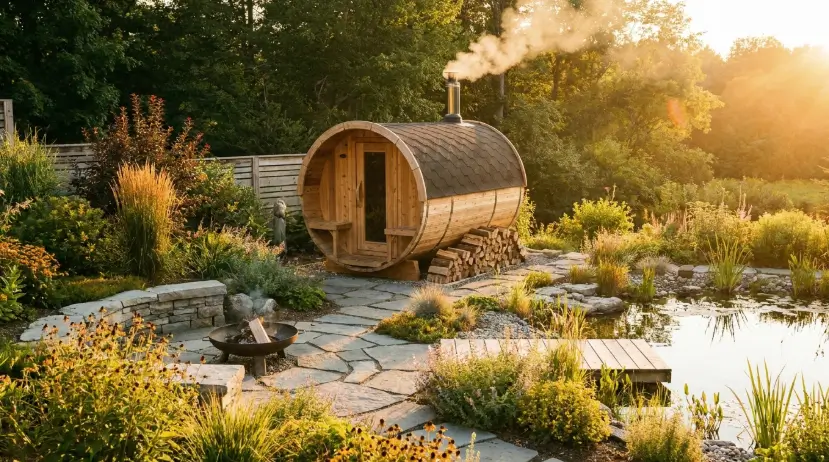
A traditional barrel sauna heated by wood or an electric rock-top heater typically costs $3,200 to $6,000 for a two to three person unit and often needs a dedicated 220V circuit or a chimney run, while an infrared barrel sauna in the same footprint runs $2,200 to $4,200 because it swaps the heavy heater core for thin carbon or ceramic panels that plug into a standard 120V outlet. Traditional heat climbs to 170 to 190 degrees Fahrenheit with steam available from water poured on hot stones, while infrared holds a lower ambient temperature, usually 120 to 150 degrees, and warms the body more directly through radiant panels. On a strict budget, infrared tends to win on both purchase price and electrical install cost. Someone who wants higher heat, steam, and the classic ritual of a wood or electric heater is often willing to pay the difference.
How Much Does Each Type Cost to Buy?
Shell construction is similar between the two styles, curved cedar or spruce staves held under tension by steel hoops, so most of the price gap comes from the heater. A traditional 4.5 to 6 kilowatt electric heater with a stone load adds $500 to $1,100 to the base shell price, and a wood-burning stove kit runs close to the same once a chimney kit is included. Infrared panels for a comparable two to three person barrel typically add $400 to $800, since the carbon or ceramic elements are lighter and simpler to wire. Buyers shopping strictly by sticker price should compare listed heater wattage and panel coverage side by side rather than assuming a lower number always means a lesser unit.
Which One Costs Less to Install?
Installation cost is where the two paths diverge the most. A traditional heater rated above roughly 6 kilowatts needs a dedicated 220V to 240V circuit, which usually means an electrician’s visit running $400 to $1,200 depending on how far the panel is from the sauna pad. Infrared barrels almost always run on a standard 120V, 15 or 20 amp household circuit, so many buyers install one without hiring an electrician at all. Anyone budgeting a barrel sauna purchase around a fixed total should price the electrical work early rather than after the shell has already shipped. Shoppers who take the time to browse the collection at a few different sellers, SweatDecks included, before buying tend to catch this cost difference before it becomes a surprise.
How Do Heat-Up Time and Running Cost Compare?
A traditional electric heater generally needs 30 to 45 minutes to bring a barrel up to bathing temperature and draws a steady 4.5 to 9 kilowatts while it runs. Infrared panels heat up faster, often in 15 to 20 minutes, and draw closer to 1.5 to 2 kilowatts once the barrel reaches its lower target temperature, since there is no stone mass to heat through. Over a season of regular use, this makes infrared noticeably cheaper to run session to session, even though the difference on a single power bill is small enough that most households will not notice it directly.
Is a Wood-Fired Option Worth Considering on a Tight Budget?
A wood-burning barrel heater sidesteps electricity almost entirely, which appeals to buyers in rural areas or anyone with a cheap firewood source. The tradeoff is a chimney kit with proper roof clearance, more hands-on time loading and tending the fire, and a heat-up window that can stretch past 45 minutes in cold weather. Local codes sometimes require a permit for the chimney penetration, which is worth checking before assuming wood heat is the cheapest path overall once labor and permitting are counted.
Which Shell Materials Hold Up Best for the Money?
Regardless of heater type, the barrel shell itself is built from curved staves, typically 1.5 to 2 inches thick, locked side by side and pulled tight by steel hoops around the circumference. Western red cedar resists rot and insects without chemical treatment, while thermally modified spruce runs a bit cheaper and still holds up reasonably well if the roof sheds rain properly. A peaked, gable-style roof drains water off two angled sides better than a flat slant roof, which matters more for shell longevity over five to ten years than whether the unit is heated by wood, electric coils, or infrared panels.
How Do Maintenance Costs Compare Over Time?
Infrared panels have a rated service life, often 5,000 to 10,000 hours of use, and while that sounds like a lot, a daily user can work through it over a decade or more, at which point a panel replacement typically runs $150 to $300 per panel rather than a full heater swap. Traditional heaters use a mix of a heating element and a stone load; the stones themselves eventually crack from repeated heating and cooling and are cheap to replace, usually $20 to $40 for a fresh bag, but the element itself is the pricier part, running $150 to $350 when it finally wears out after 5 to 10 years. Neither heat type demands much routine maintenance beyond an occasional wipe-down and checking that stones or panels sit properly, so the real cost difference shows up only when a part eventually needs replacing rather than in day-to-day upkeep.
Does the Health Research Favor One Style Over the Other?
Most published research on sauna bathing, including a 2018 review in Mayo Clinic Proceedings and a 2001 review in The American Journal of Medicine, tracks heat exposure and cardiovascular associations broadly rather than comparing traditional stone-based heat against infrared panels directly. A 2023 Mayo Clinic Proceedings review looking at Finnish sauna bathing alongside other lifestyle factors likewise studied conventional high-heat sessions rather than infrared use specifically. That means the health literature does not clearly favor either heating style; the practical differences between traditional and infrared barrels come down to budget, install complexity, and personal preference for higher heat versus faster, lower-temperature sessions.
Frequently Asked Questions
Is an infrared barrel sauna cheaper than a traditional one? Usually yes. A two to three person infrared barrel typically runs $2,200 to $4,200 including panels, while a traditional wood or electric rock-top model in the same size runs $3,200 to $6,000, partly because the heater core costs more and often needs a dedicated 220V circuit.
Can I plug a barrel sauna into a regular outlet? Most infrared barrel saunas plug into a standard 120V, 15 or 20 amp household outlet. Traditional electric heaters above roughly 6 kilowatts almost always need a dedicated 220V to 240V circuit installed by an electrician.
How much hotter does a traditional barrel sauna get than infrared? A traditional barrel sauna typically reaches 170 to 190 degrees Fahrenheit with steam available from water poured on hot stones. Infrared units hold a lower ambient temperature, usually 120 to 150 degrees, and heat the body directly through radiant panels instead.
Does a wood-fired barrel sauna cost less to run? Per session, yes, since firewood is often cheaper than electricity in many regions. But a wood-fired unit usually costs more to buy, needs a chimney with roof clearance, and takes more hands-on time to load and tend than either electric or infrared.
References
- Cardiovascular and Other Health Benefits of Sauna Bathing: A Review of the Evidence, Mayo Clinic Proceedings, 2018
- Benefits and risks of sauna bathing, The American Journal of Medicine, 2001
- Does the Combination of Finnish Sauna Bathing and Other Lifestyle Factors Confer Additional Health Benefits? A Review of the Evidence, Mayo Clinic Proceedings, 2023
By Derek Halloran